
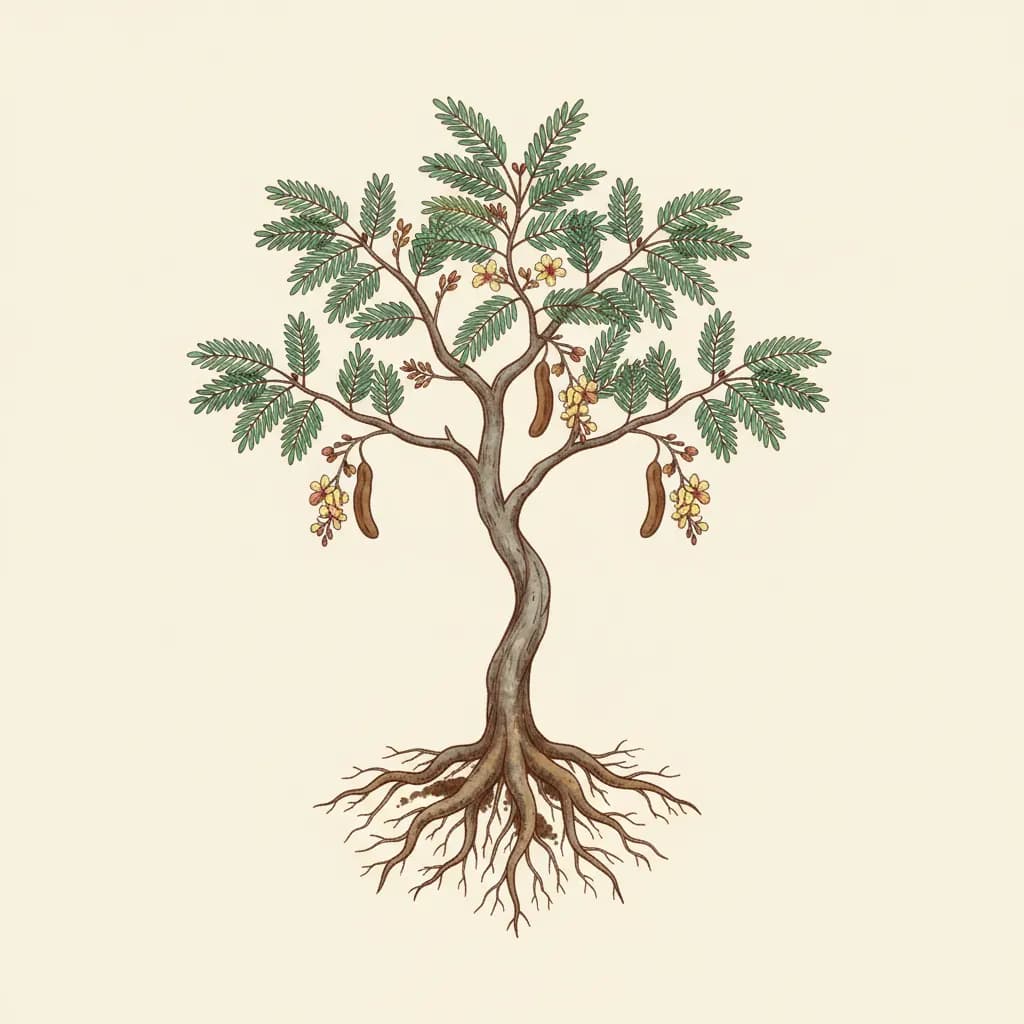
Fabaceae-Caesalpinaceae
Tamarindus indica
Tamarind · Mkwaju
T
Available in our catalogue
We propagate this species and you can order it from our catalogue.
View in catalogue →About
The Tamarind tree is a long-lived, medium-growth evergreen to semi-deciduous tree that can reach heights of 25–30 metres with a dense, widely spreading, vase-shaped crown. It produces brown, pod-like fruits containing a sweet, tangy pulp, which is used in cuisines globally and traditional medicine. The leaves are alternately arranged, paripinnately compound with 10-18 pairs of small, elliptic-ovular, bright green leaflets that fold up at night.
Where it works in Kilifi
Tamarind thrives in hot tropical and semi-arid regions and is well-suited for coastal areas like Kilifi due to its high resistance to drought and wind-borne salt. It grows best in full sun and adapts to a wide range of well-drained soils, including sandy loam, loamy, or clay, with a pH of 4.5-7.5. Given its extensive, dense, and widely spreading crown, it serves well as a specimen tree, providing deep shade, and can also be used as a windbreak. It requires ample spacing, with recommendations of 7-10 metres between trees.
Growing notes
This is a slow to medium-growth tree that is long-lived, often productive for 50-60 years and living over 200 years. Once established, mature trees are highly drought-tolerant and require minimal supplemental irrigation, though young trees need consistent moisture for the first 2-3 years. It is sensitive to frost when young, but mature trees can tolerate brief temperatures down to -1°C. Grafted trees can fruit in 3-4 years, while those from seed typically take 6-12 years. The dense shade and broad crown can inhibit growth of other plants underneath.
Sources
Researched with web grounding from: wikipedia.org, gardenia.net, beyondforest.org, booyongconservation.com, missouribotanicalgarden.org, roamingroots.blog. Please verify with local knowledge before relying on these notes.