
Fabaceae
Pterocarpus angolensis
Bloodwood, Kiaat, Wild Teak · Mninga
Not currently in the nursery
We can propagate most native species on request — get in touch to discuss timeline and quantity.
About
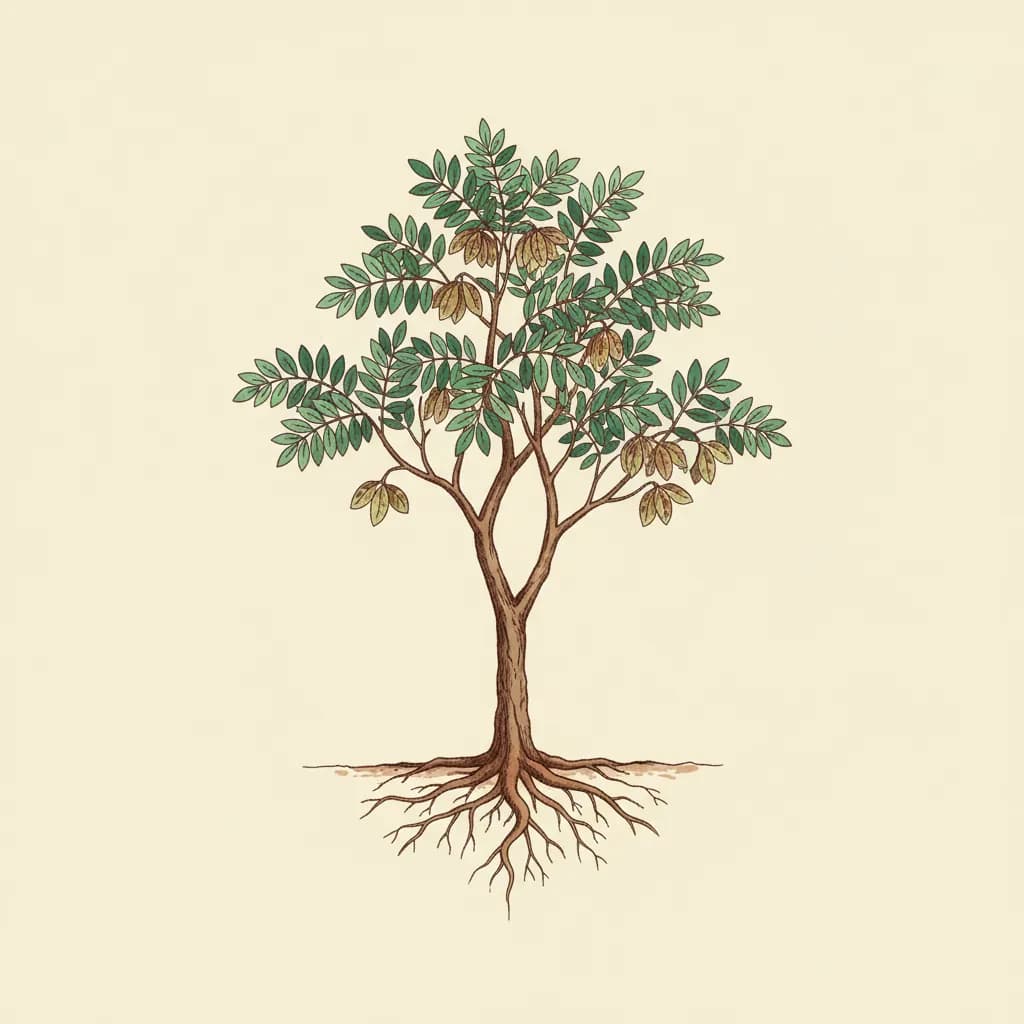
This medium to large deciduous tree, typically growing 10-25 metres tall, is known for its dark brown, fissured bark that exudes a sticky, blood-red sap when damaged. It produces an abundance of fragrant, orange-yellow, pea-like flowers in sprays during spring, followed by distinctive bristly, circular, winged pods that resemble a 'fried egg' and persist on the tree. The compound leaves are shiny green, appearing with or shortly after the flowers.
Where it works in Kilifi
Pterocarpus angolensis thrives in full sun and well-drained sandy or rocky soils, making it suitable for Kilifi's warm, frost-free environment. It can be planted as a stately specimen tree or for light shade, requiring a minimum spacing of 5x5 metres to accommodate its spreading crown.
Growing notes
Growth is initially slow, with seedlings often dying back annually for several years until a robust root system develops, after which it can grow at a medium to fast rate (0.5-1m annually). Once established, it requires well-defined wet and dry seasons and is relatively drought-tolerant, preferring to be watered sparingly and allowing the soil to dry out between waterings. It is sensitive to frost, though older trees may withstand very light frosts.
Sources
Researched with web grounding from: sanbi.org, treesa.org, google.com, worldagroforestry.org, wikipedia.org, mozambiqueflora.com. Please verify with local knowledge before relying on these notes.