
Oleaceae
Olea europaea subsp. cuspidata
African Olive
Not currently in the nursery
We can propagate most native species on request — get in touch to discuss timeline and quantity.
About
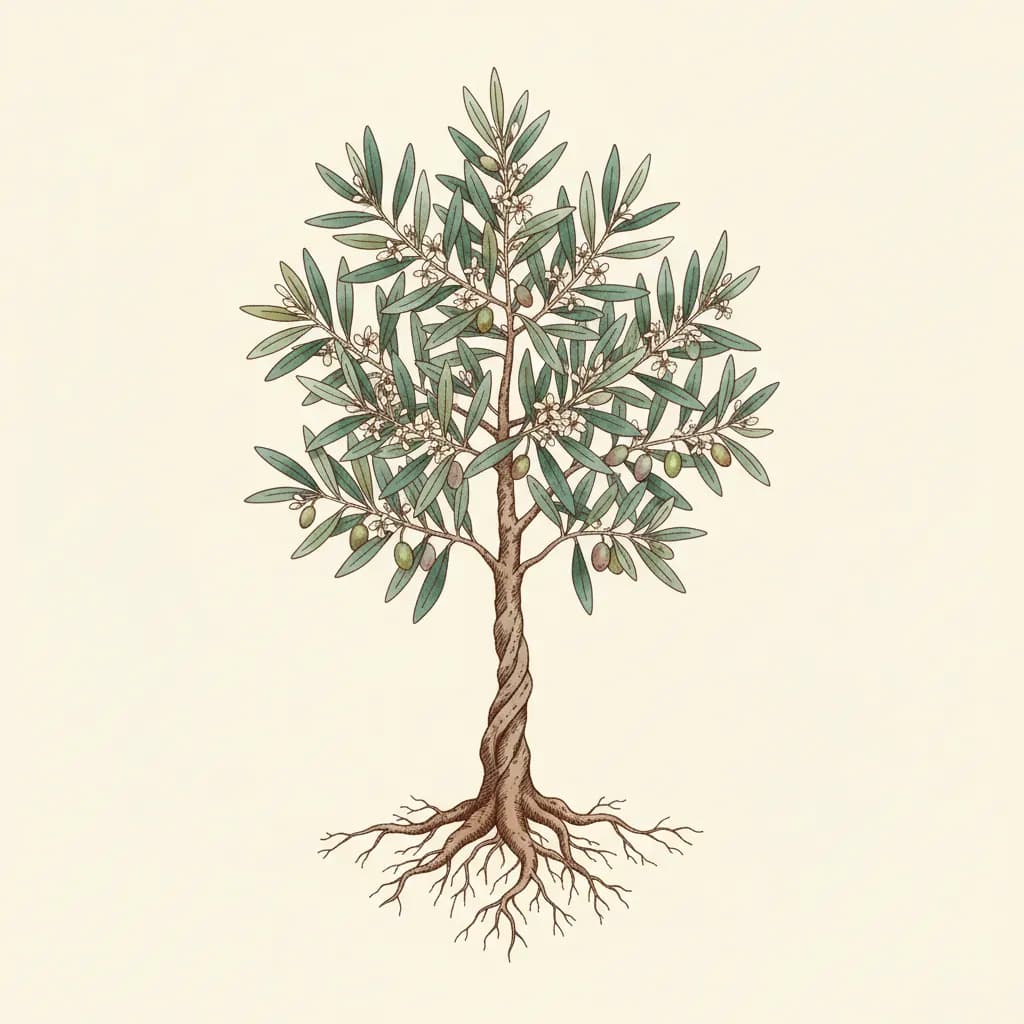
This evergreen tree, growing 2-15m tall, features a rounded crown and striking grey-green foliage. Its rough, dark brown bark often develops characteristic fissures, complementing its stiff, narrowly oval leaves, which are glossy dark green above and silvery-scaled beneath. Small, fragrant, greenish-white flowers give way to edible, purple-black, oval fruits, 5-8mm in diameter, which are bitter-sweet. The durable, termite-resistant wood is highly valued for fine furniture and turnery.
Where it works in Kilifi
Ideal for Kilifi's coastal conditions, this species thrives in full sun and well-drained, even stony soils. It is excellent as a drought-tolerant specimen tree, for creating windbreaks or hedges, and in restoration planting due to its hardiness. Allow adequate space for its mature spread, as it can form dense stands.
Growing notes
A slow-growing tree, the African Olive is exceptionally hardy and drought-resistant once established, requiring minimal water. While resilient to dry, hot conditions, wind, and salt, young plants benefit from regular watering. Be aware that it can be an aggressive self-seeder in some introduced environments, spreading via bird-dispersed fruit.
Sources
Researched with web grounding from: wikipedia.org, efloraofindia.com, weedbusters.org.nz, worldagroforestry.org, cabidigitallibrary.org, prota4u.org. Please verify with local knowledge before relying on these notes.