
Moraceae
Morus mesozygia
African mulberry
Not currently in the nursery
We can propagate most native species on request — get in touch to discuss timeline and quantity.
About
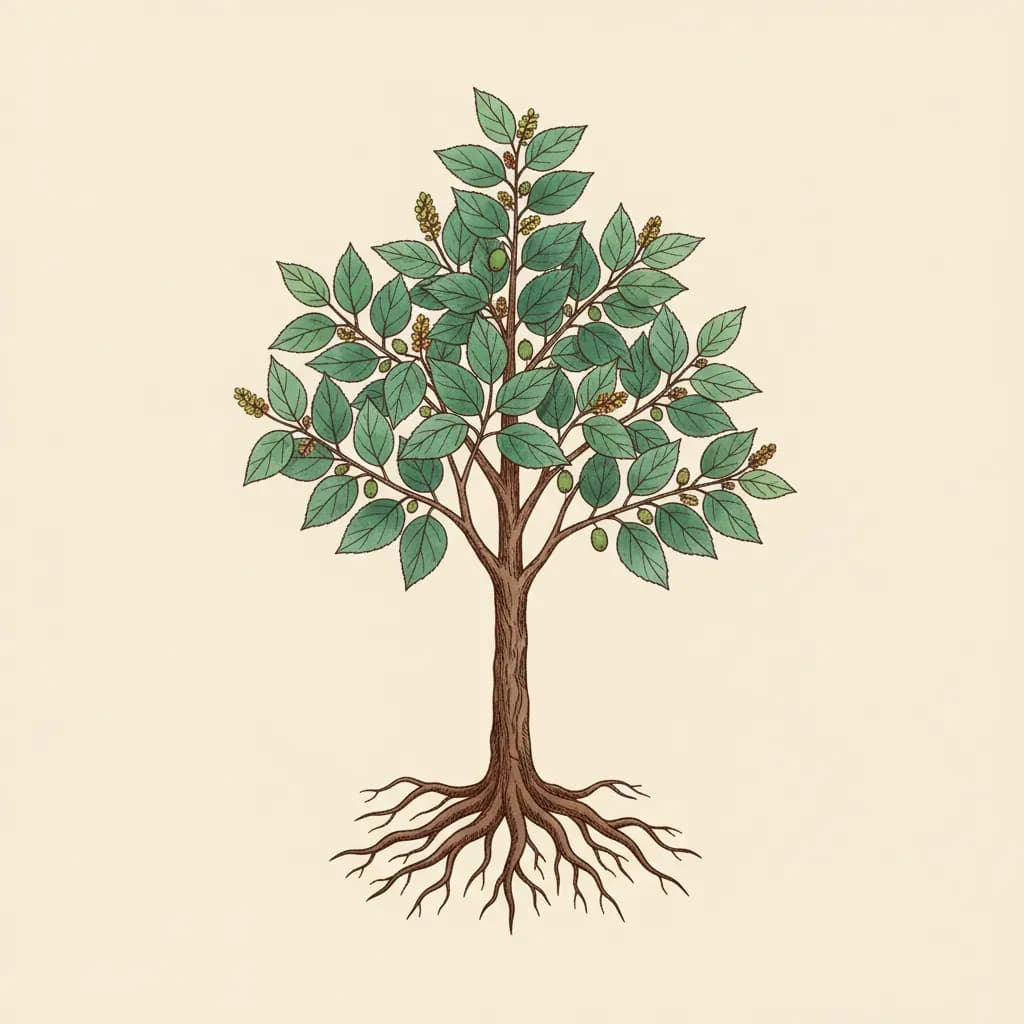
African mulberry is a large deciduous tree, occasionally evergreen, growing up to 30-40 metres tall, featuring an umbrella-shaped crown and grey-brown bark that exudes milky latex when cut. Its dark green, oval leaves have serrated margins and are often three-veined at the base, while small, yellow, unisexual flowers develop into edible, round, berry-like fruits. This tropical African species is commonly found in evergreen and semi-deciduous forests.
Where it works in Kilifi
This African mulberry thrives in full sun and is adaptable to a range of well-drained soils, including sandy, loamy, and clay. It makes an excellent specimen or shade tree for a large garden or landscape, and is also valuable for restoration efforts in open, sunny areas. Ensure ample spacing, at least 15 feet from other structures or plants, to accommodate its mature size and root system.
Growing notes
African mulberry exhibits a fast growth rate, potentially adding nearly 2 metres in height during its first year in ideal conditions. While it prefers moist soil, established trees are drought tolerant; however, consistent deep watering is beneficial, especially during flowering and fruiting periods. Be aware that the sawdust from its wood can cause dermatitis and respiratory irritation.
Sources
Researched with web grounding from: pfaf.org, worldagroforestry.org, theferns.info, zimbabweflora.co.zw, wellspringgardens.com, gardenoracle.com. Please verify with local knowledge before relying on these notes.