
Moraceae
Ficus bussei
Busse's fig · Mugandi
T
Not currently in the nursery
We can propagate most native species on request — get in touch to discuss timeline and quantity.
About
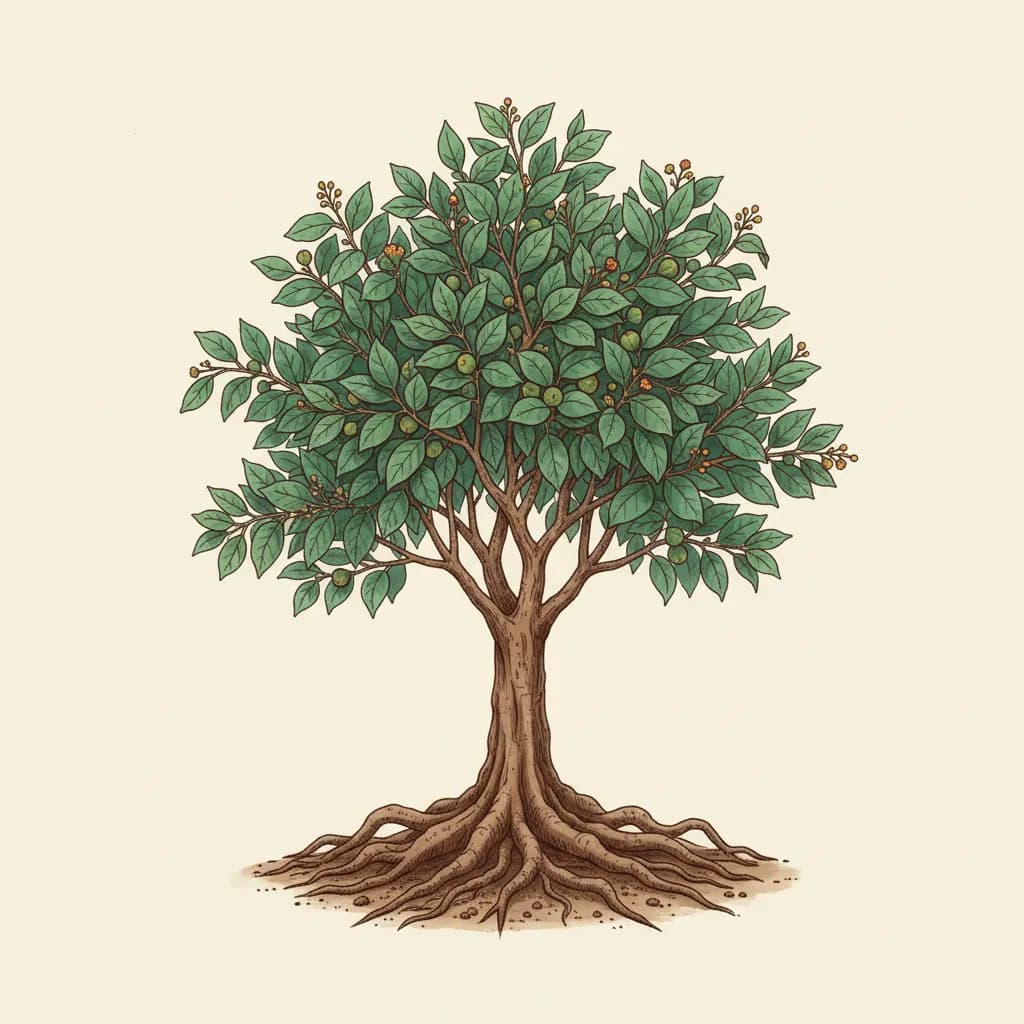
A medium to large evergreen or briefly deciduous tree, often beginning life as an epiphyte before developing into a free-standing tree up to 25 metres tall. It features smooth, grey-brown bark that may flake on older stems, and contains latex. Leaves are clustered towards branch ends, dark olive green above and paler below, with a characteristic cordate base. Figs appear in pairs in leaf axils, are subspherical, about 1.5-3 cm in diameter, and change from green and warty to yellowish when ripe.
Where it works in Kilifi
Ideal for coastal gardens and landscapes in full sun, this tree thrives in well-drained, sandy, and alluvial soils. It serves as an excellent shade or specimen tree, attracting birds, bats, and monkeys with its fruit, and is suitable for restoration in coastal and riverine areas.
Growing notes
This fig is reasonably fast-growing, though its rate varies with conditions. It prefers ample water, especially when young, and well-drained soil. Care should be taken to acclimate nursery-grown plants to full sun gradually to prevent leaf burn. Avoid fertilizers with high salt content.
Sources
Researched with web grounding from: zimbabweflora.co.zw, plantnet.org, zambiaflora.com, kilifigarden.info.ke, urbantropicals.com, patioplants.com. Please verify with local knowledge before relying on these notes.