
Euphorbiaceae
Euphorbia bussei var. kibwezensis
Not currently in the nursery
We can propagate most native species on request — get in touch to discuss timeline and quantity.
About
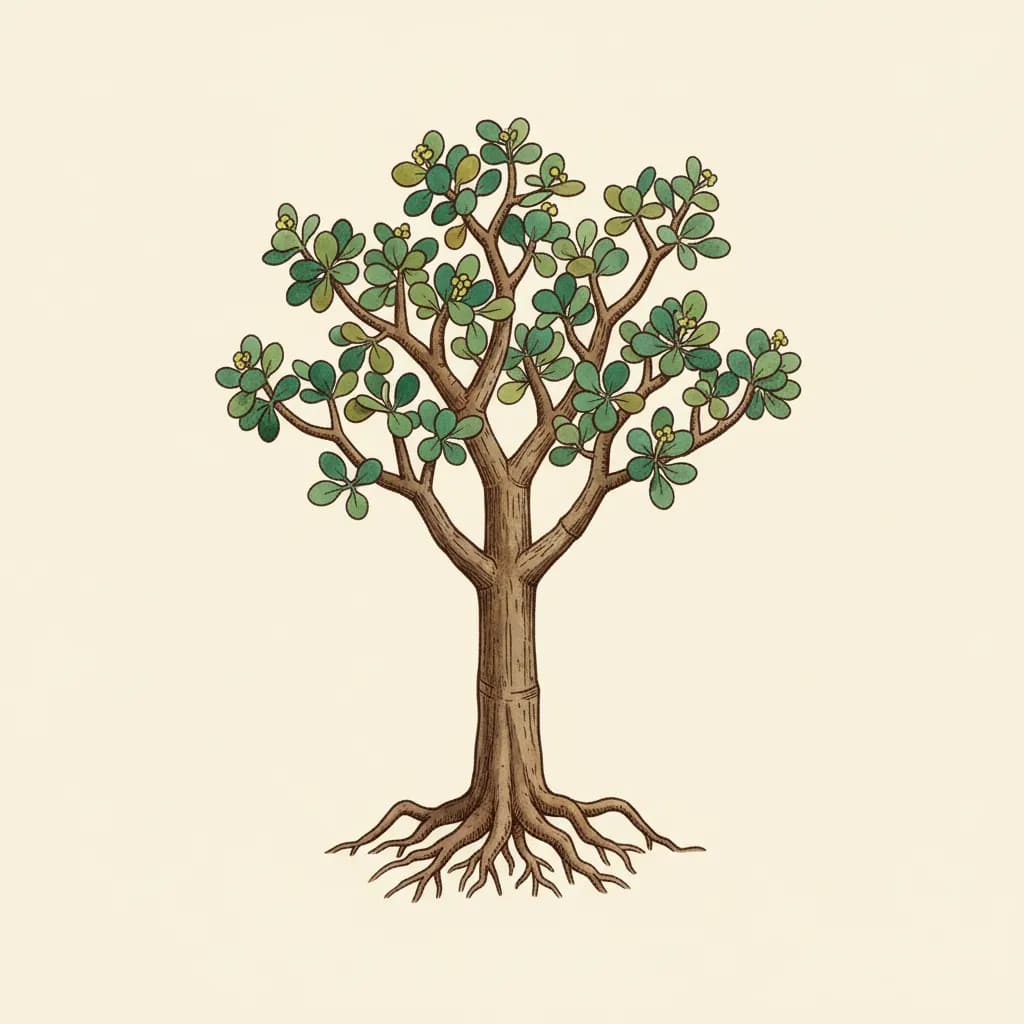
This succulent tree can reach up to 15 metres tall, featuring a cylindrical trunk and curved, ascending branches that form a rounded crown. Its thick, grey, fissured bark is typically marked with six vertical rows of persistent spines. The 3- to 4-angled branches are deeply winged, constricted into ovate segments, and bear rudimentary, scale-like leaves. Like all Euphorbias, it contains a toxic white milky sap which can cause skin irritation or eye damage.
Where it works in Kilifi
Native to eastern Tanzania and Kenya, this species thrives in very warm, sunny conditions on rocky slopes and in sandy, well-drained soils in deciduous forests. It is ideal as a striking specimen tree in a Kilifi garden or for restoration, requiring full sun and good drainage.
Growing notes
This drought-tolerant succulent prefers bright light for compact growth and needs well-drained soil. Water when the top inch of soil is dry during warmer months, reducing in winter, and protect from very low temperatures. Handle with care to avoid contact with its caustic milky sap.
Sources
Researched with web grounding from: theferns.info, worldofsucculents.com, planetdesert.com, cacti.co.nz, harvesttotable.com, euphorbia-international.org. Please verify with local knowledge before relying on these notes.