
Fabaceae-Papilionaceae
Crotaliaria malindiensis
Not currently in the nursery
We can propagate most native species on request — get in touch to discuss timeline and quantity.
About
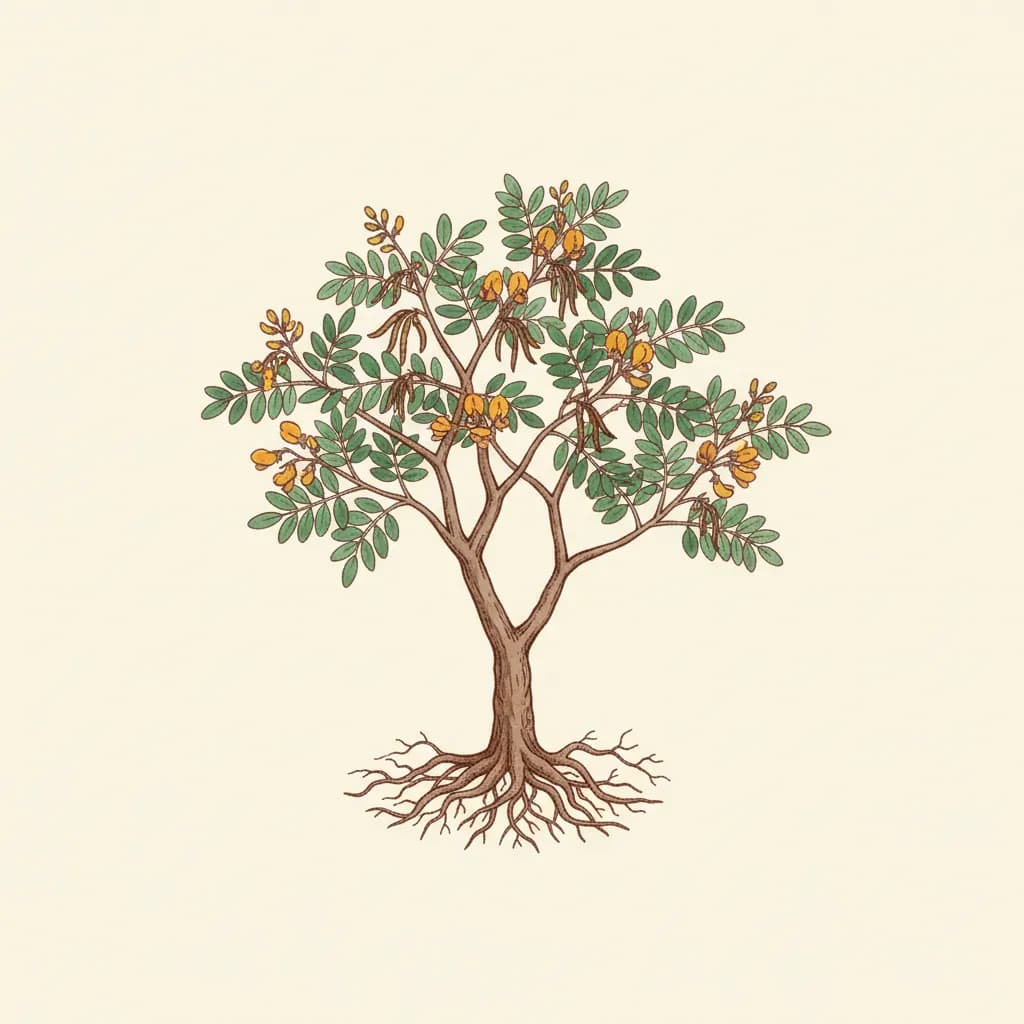
This annual or short-lived perennial herb features prostrate radiating branches that can reach up to 50 cm long. Its leaves are composed of three leaflets, which vary in shape from oblanceolate-elliptic to obovate or linear-lanceolate, and are hairy underneath. Yellow flowers, sometimes marked with purplish veins, have a rounded keel with a short, untwisted beak, followed by inflated, hairy pods containing 14–20 seeds.
Where it works in Kilifi
Originating from the Kenyan coast, including Kilifi, this species is well-suited for restoration or as a groundcover in sunny, well-drained areas within a Kilifi garden or landscape. It thrives in open sites and poor soils, typical of its native habitat at altitudes between 70 and 230 metres.
Growing notes
This plant grows as an annual or short-lived perennial, likely with a relatively fast growth rate common to the genus. It generally prefers full sun and well-drained soil. As with many Crotalaria species, caution should be exercised as its seeds may be toxic, and it can self-seed readily.
Sources
Researched with web grounding from: jstor.org, iict.pt, ncsu.edu, southeastgarden.com, whatnext10.com, selinawamucii.com. Please verify with local knowledge before relying on these notes.