
Capparaceae
Capparis tomentosa
Woolly Caper Bush · Mbada paka
L
Not currently in the nursery
We can propagate most native species on request — get in touch to discuss timeline and quantity.
About
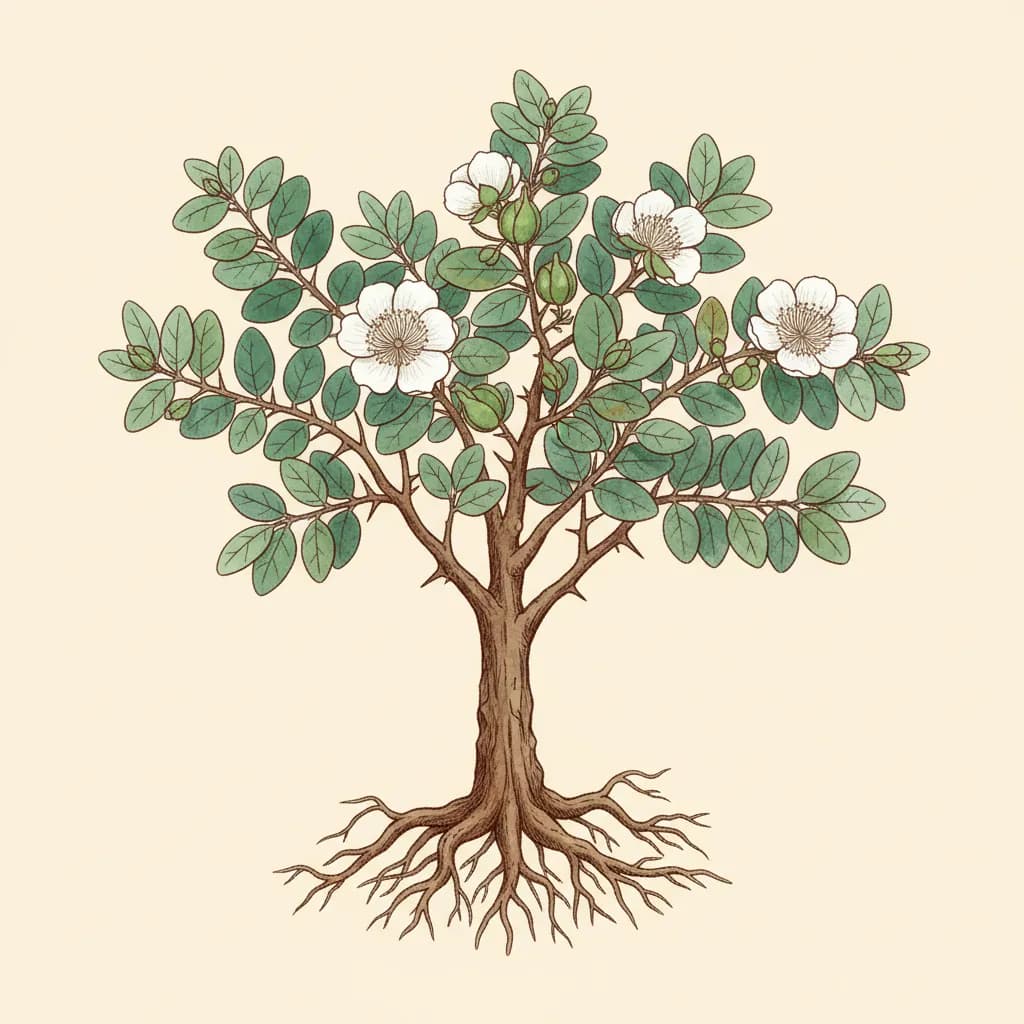
This deciduous, spiny shrub or small tree can also grow as a robust woody climber, often reaching up to 10 metres in height or length. It features soft, velvety, greyish-green leaves and sharp, hooked spines in the leaf axils. Fragrant, pale yellowish-green flowers with a tuft of white or pink stamens bloom, later developing into pendulous, globose fruits that ripen to pink or bright orange and are edible by humans and monkeys.
Where it works in Kilifi
Ideal for security hedging or as a large specimen plant in a Kilifi-coast garden, it thrives in full sun to semi-shade and sandy, well-drained soils. Due to its robust and scrambling habit, it requires ample space, potentially spreading up to 15 metres.
Growing notes
This is a fast-growing, water-wise plant once established, suitable for arid conditions. Caution is advised as its leaves, roots, and other parts have been reported to be toxic to livestock and in large doses, to humans.
Sources
Researched with web grounding from: theferns.info, sanbi.org, google.com, kew.org, worldagroforestry.org, wikipedia.org. Please verify with local knowledge before relying on these notes.